I’ve spent the better part of 11 years in the trenches of technical SEO and analytics. In that time, I’ve sat through hundreds of agency pitches, reviewed thousands of reporting dashboards, and—if I’m being honest—fired more "black-box" vendors than I care to count. When a client asks, "Is Performance Max (PMax) worth it for my multi-market ecommerce brand?" my immediate response isn't a "yes" or "no." My response is: "Show me your dashboard, and show me how you’re validating the entity signals."

If you aren’t tracking, you’re guessing. And in the world of multi-market ecommerce, guessing is just a fancy way to set fire to your capital.
The PMax Problem: The Illusion of "Set and Forget"
Google’s Performance Max is sold as the silver bullet for ecommerce. You feed it assets, you define your target ROAS, and the algorithm magically finds customers across Search, Shopping, Display, YouTube, and Gmail. It’s convenient. It’s scalable. It’s also the ultimate "black box."
For a single-market site, you might get away with the "black box" approach. But when you’re pushing into five, ten, or thirty markets, the complexity increases exponentially. You aren’t just competing against local players; you’re competing against local intent. If your PMax campaign is optimizing for generic "high-intent" clicks while ignoring how local AI search engines are surfacing your products, you’re missing the forest for the trees.
Ever notice how i’ve seen massive brands—think in the vein of a coca-cola distribution model—try to force a localized pmax strategy using global templates. The result? Wasted spend on markets where their entity authority was non-existent. Without granular, daily tracking, PMax simply burns your budget on whatever is easiest to convert, not what is best for your brand’s long-term market dominance.
aeoSearch is Shifting: From Blue Links to AI Answers
If you are still optimizing for the ten blue links, you are fighting a war that ended three years ago. The rise of AI Overviews and answer-based search interfaces means that visibility is no longer just about ranking; it’s about being the cited entity within the AI’s response.
This is where AEO (Answer Engine Optimization) enters the conversation. AEO is not a buzzword—it is a measurement-first discipline. When you are running multi-market ads, you need to understand whether your brand and product entities are being surfaced by AI in Brazil the same way they are in Germany. If the AI doesn't recognize your product as a viable solution for a specific query, your PMax ads are essentially yelling in an empty room.
The solution isn't "algorithm-chasing talk." It’s visibility tracking. You need to be monitoring your presence in AI-driven responses as religiously as you monitor your CPC. Tools like FAII.ai and FAII-node have become my go-to for this because they move past the "vanity KPI" slides that agencies love to bury their failures in.
Why Measurement-First AEO Trumps Generic Packages
One of my biggest pet peeves is the "generic package." You know the one: "We will manage your PPC, run your PMax, and provide monthly reporting." If a vendor can’t tell me how they are auditing their own AI visibility daily, I don't want them anywhere near my accounts.
AEO FD (Answer Engine Optimization for Data-driven growth) provides a framework that bridges the gap between ad spend and organic entity authority. When you combine PMax with a strict AEO strategy, you stop viewing them as separate silos. Instead, you view them as a cohesive funnel:
- Top of Funnel: Are we appearing in AI-generated answers for category-defining queries? Mid-Funnel: Are our product entities surfacing correctly across global search engines? Bottom of Funnel: Is our PMax bidding aligned with the intent data we’ve gathered from our AI visibility audit?
Comparing the Traditional vs. Measurement-First Approach
Feature Traditional PPC Agency Measurement-First AEO Approach Reporting Vanity KPIs (ROAS, impressions) Entity authority, AI-visibility share, conversion incrementality PMax Strategy Set ROAS target and pray Automated visibility tracking + manual entity tuning Multi-Market Same strategy, different currency Market-specific entity signal mapping Tooling Google Ads Dashboard only Multi-model verification (FAII-node/FAII.ai)The Necessity of Multi-Model Verification
You cannot trust a single AI model to verify your market presence. I’ve seen too many vendors rely solely on a single source of truth, only for that source to be hallucinating or biased toward a specific provider. This is why multi-model verification is non-negotiable.
Using FAII-node, my team can query multiple models to see how they perceive our brand's entity signals in different regions. If Model A says we are a leader in "sustainable running shoes" in France, but Model B thinks we’re a local bakery, I know exactly where the disconnect lies. Exactly.. We don’t guess; we verify.
By integrating FAII.ai into our reporting pipelines, we create a dashboard that shows the *truth*—not the sanitized, polished version that agencies show to hide performance dips. When you see your AI visibility score drop while your PMax costs per conversion remain flat, you know you’re in trouble. That’s the kind of technical transparency that saves seven-figure budgets.
Is It Worth It?
So, back to the original question: Is Performance Max worth it for multi-market ecommerce? Yes, but only if you are mature enough to move away from "black-box" dependence.
If you are looking for an agency that uses Four Dots or similar advanced methodologies to actually audit your visibility, then yes, PMax can be a powerful engine. If you are looking for someone to "take the wheel" so you don’t have to look at the metrics, you are walking into a trap.
The "contract lock-ins" hidden in the fine print of generic agency packages are designed to protect them from your dissatisfaction. True performance doesn't need a 12-month lock-in; it needs daily verification and an obsession with entity signals.
Final Thoughts for the Data-Obsessed
Stop obsessing over "algorithm changes" or "Google updates." Google updates are the weather; your entity signal is the house you’ve built. If you build it on a foundation of poor data and reliance on black-box PMax optimization, a light breeze will blow it down.
If you are serious about multi-market growth, do the following:
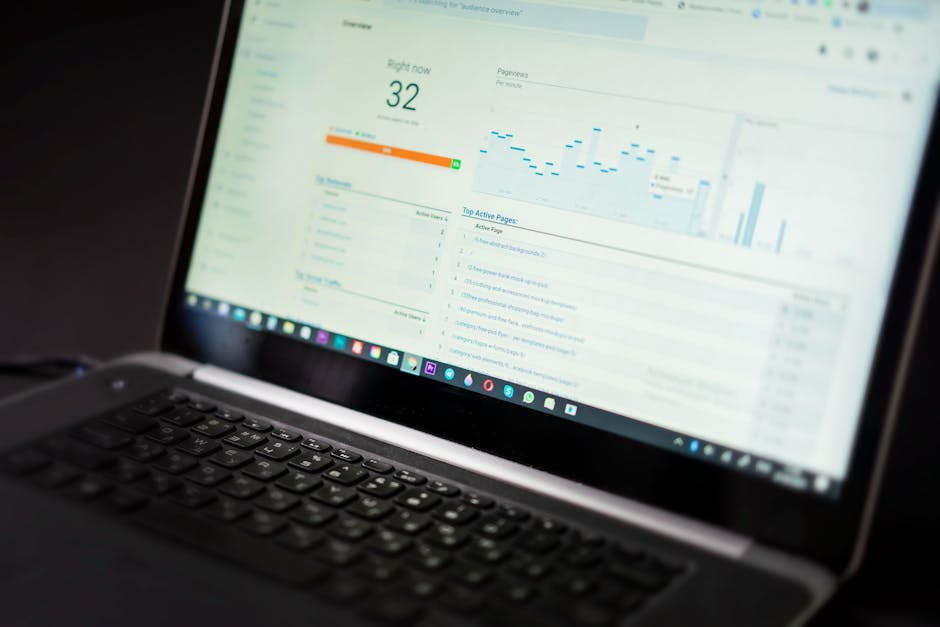
Still think your current multi-market PMax strategy is working? Send me your dashboard link. Let’s see what the data actually says.